CQV CSV Strategies To Elevate Process Performance
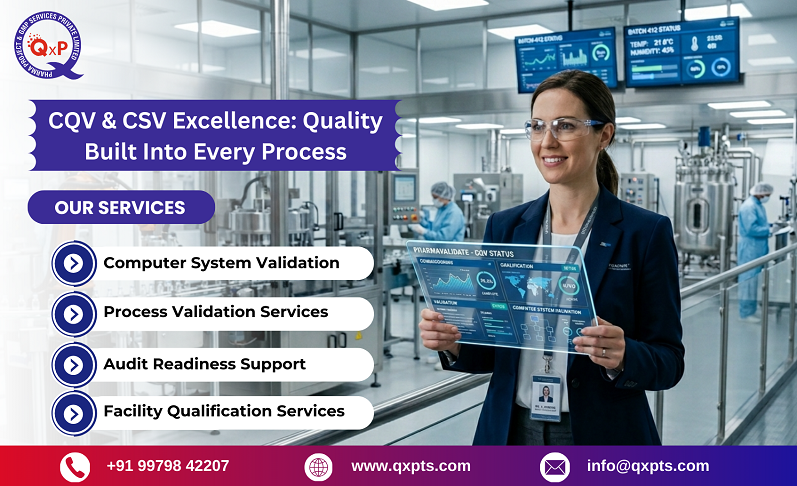
Transforming Pharma Operations with CQV & CSV Strategies: QxP Pharma Consultant
Across modern pharmaceutical and healthcare industries, operational performance is no longer defined solely by production capacity. CQV CSV strategies to elevate process performance have become essential, as success now hinges on process reliability, regulatory compliance, equipment validation, and digital system integrity. As manufacturing technologies advance, companies operating in India, the USA, Europe, the Middle East, and Southeast Asia face increasing pressure to ensure that every system and process functions exactly as intended.
From sterile pharmaceutical manufacturing plants in India to hospital technology infrastructure in the UAE, production sites in Saudi Arabia, and advanced biotech facilities in the USA, Canada, the UK, Europe, Australia, and Southeast Asia, organizations must maintain strict compliance with Good Manufacturing Practices (GMP). At the same time, regulators expect clear documentation proving that equipment, utilities, and computerized systems are properly qualified and validated.
In this environment, the role of a Pharma CQV & CSV Consultant has become increasingly important. Commissioning, Qualification, and Validation (CQV), along with Computer System Validation (CSV), ensure that facilities, equipment, and digital systems perform consistently and safely while meeting regulatory expectations.
For pharmaceutical companies, hospitals, industrial plants, and research facilities, structured CQV and CSV strategies help elevate process performance while reducing operational and compliance risks.
Growing Importance of Safety & Compliance in Global Industries
Over the past decade, regulatory oversight across industries has increased significantly. Pharmaceutical manufacturers, healthcare institutions, and industrial facilities must now demonstrate traceability, process control, and operational transparency.
Several factors are driving this global shift.
First, international regulatory harmonization means companies operating in one region often need to satisfy compliance expectations from multiple jurisdictions. For example, a pharmaceutical product manufactured in India may be exported to Europe, the USA, or Australia, each requiring strong documentation and validated systems.
Second, insurance providers and investors increasingly require proof that organizations follow robust compliance frameworks before supporting large projects.
Third, client expectations have evolved. Hospitals, healthcare organizations, and global pharmaceutical companies want to work with partners that demonstrate a structured compliance culture.
As a result, organizations across India, Qatar, Oman, Tajikistan, Afghanistan, Southeast Asia, Europe, and North America are investing more heavily in structured CQV and CSV programs.
What Is a Pharma CQV & CSV Consultant?
A Pharma CQV & CSV Consultant supports pharmaceutical, biotechnology, and healthcare organizations in verifying that their systems, facilities, and digital platforms perform reliably and meet regulatory expectations.
In practical terms, this work involves three major areas.
- Commissioning ensures that equipment and systems are installed correctly and are ready for operation.
- Qualification verifies that systems operate within defined parameters and meet process requirements.
Validation, particularly Computer System Validation (CSV), ensures that software systems used for production, quality management, data storage, and laboratory operations perform consistently and maintain data integrity.
In global pharmaceutical environments, these processes may apply to:
- Manufacturing equipment
- HVAC and cleanroom systems
- laboratory instruments
- automation platforms
- ERP and quality management software
- hospital digital systems
For organizations operating across India, the Middle East, North America, and Europe, structured CQV and CSV programs ensure that GMP Compliance and Regulatory both physical infrastructure and digital systems support safe and reliable production.
Common Safety & Compliance Risks Across Countries
- Despite technological progress, industrial and pharmaceutical environments still face several operational risks.
- One of the most common challenges involves unvalidated equipment or software systems. When systems are implemented without structured verification, performance inconsistencies may occur.
- Another risk involves documentation gaps. Regulatory inspections frequently focus on traceability. If equipment qualification reports or system validation records are incomplete, organizations may face warnings or delays.
Operational hazards also arise when production equipment is modified without proper requalification.
Across global facilities—from pharmaceutical plants in India to research laboratories in Canada and hospital facilities in the UAE—these issues can lead to:
- production disruptions
- regulatory findings
- costly corrective actions
- loss of international business credibility
This is why structured CQV and CSV strategies are essential for organizations aiming to maintain long-term operational stability.
How Professional Safety Certification Reduces Risk?
A structured CQV and CSV framework helps organizations detect potential issues before they impact production or compliance.
Professional certification programs usually begin with system risk assessments, identifying areas where equipment, utilities, or digital platforms could affect product quality or patient safety.
Next, installation and operational testing ensure systems perform according to specifications.
Documentation also plays a critical role. Proper validation protocols, test reports, and traceability records help organizations demonstrate compliance during regulatory inspections.
In international project sites, particularly those operating across multiple regulatory environments such as India, the UK, Europe, the USA, and Australia, documentation consistency becomes extremely important.
Structured CQV and CSV processes provide this operational clarity.
Country-Specific Compliance Considerations
While global pharmaceutical regulations share common principles, compliance expectations can vary across regions.
- India: In India, pharmaceutical manufacturing must align with Good Manufacturing Practices and industrial safety frameworks that emphasize equipment qualification, worker safety, and documentation transparency. Regulatory inspections often focus on data integrity and validation practices.
- Middle East: Countries such as Saudi Arabia, Qatar, Oman, and the UAE increasingly require international compliance standards for pharmaceutical and healthcare facilities. Contractor safety, project qualification documentation, and equipment validation are often evaluated during facility approvals.
- Europe, the USA, and Canada: These regions are known for extremely detailed regulatory audits. Validation documentation, electronic record systems, and data integrity frameworks must demonstrate clear traceability.
Facilities exporting to these markets often implement global CQV and CSV standards early in project development.
Worker Training & On-Site Safety Implementation
Even the most sophisticated systems require trained personnel to operate them correctly.
Pharmaceutical facilities often employ multilingual workforces, especially in global regions such as Southeast Asia and the Middle East. This creates challenges in training consistency.
Effective CQV and CSV programs typically include:
- operational training programs
- standard operating procedures
- safety awareness sessions
- system usage training
In international project sites, training programs must also consider cultural workplace differences and varying technical backgrounds among employees.
Practical, hands-on training improves both system performance and workplace safety.
Machinery, Equipment & Project Safety
Industrial and pharmaceutical environments rely on complex equipment systems. Audit & Audit Compliance systems must function consistently to maintain production quality.
- CQV frameworks typically apply to several categories of infrastructure.
- Manufacturing facilities require validation of production lines, utilities, and environmental control systems.
- Construction and reconstruction projects often require commissioning and qualification before the facility begins operations.
- Hospitals and critical healthcare facilities rely on validated digital systems, medical equipment, and environmental control infrastructure to maintain patient safety.
From pharmaceutical plants in India to hospital infrastructure projects in Australia and healthcare facilities in Europe, equipment validation plays a critical role in operational reliability.
Role of Safety Audits, Reporting & Documentation
Audits are an essential part of regulatory compliance.
Government inspections, client audits, and insurance reviews often examine validation records to confirm that systems operate safely and reliably.
During these evaluations, organizations must demonstrate:
- documented qualification procedures
- traceable test results
Organizations that maintain well-organized validation documentation typically experience smoother inspections and faster regulatory approvals.
Long-Term Business Value of Global Safety Certification
While CQV and CSV programs require careful planning, they provide long-term benefits for organizations.
- Validated systems reduce the risk of operational failures and improve process consistency.
- Facilities with structured compliance programs also tend to experience fewer regulatory observations, which helps maintain production continuity.
In global markets, validated facilities often gain stronger credibility with international partners and regulatory authorities.
For organizations expanding across India, the Middle East, Europe, North America, and Southeast Asia, a strong compliance infrastructure becomes a competitive advantage.
What to Check Before Choosing a Safety Certification Partner?
Selecting the right consulting partner is an important decision.
Organizations should look for firms that demonstrate both international regulatory understanding and practical project experience.
Important factors include:
- experience across the pharmaceutical and healthcare industries
- understanding of regional regulatory environments
- capability to perform on-site validation and inspections
- structured documentation practices
- ability to support global projects
A balanced approach that combines technical expertise with operational experience often delivers the best results.
Why Working with a Globally Oriented Safety Firm Matters?
- Companies operating across multiple regions benefit from consistent compliance strategies.
- A globally oriented safety and validation partner can help standardize procedures across different facilities while still addressing local regulatory expectations.
- This ensures that equipment, processes, and computerized systems operate within a unified validation framework.
- For international pharmaceutical organizations and healthcare infrastructure projects, such consistency helps maintain operational stability and regulatory confidence.
Organizations seeking structured support for validation and compliance programs can explore the expertise of QXP Pharma Project Consultant & GMP Service PVT LTD, a professional consulting firm supporting pharmaceutical and healthcare projects worldwide.
More information about their global consulting services can be found on their website: https://www.qxpts.com/
Conclusion:
As pharmaceutical manufacturing, healthcare infrastructure, and industrial production continue to expand globally, the importance of structured CQV and CSV strategies becomes increasingly clear.
Organizations must ensure that equipment, facilities, and digital systems perform consistently while meeting regulatory expectations across different jurisdictions.
For companies operating in India, the Middle East, North America, Europe, Australia, and Southeast Asia, strong validation and compliance frameworks support both operational reliability and regulatory readiness.
Ultimately, CQV and CSV programs are not only about meeting compliance requirements. They represent a broader commitment to worker safety, product quality, patient protection, and responsible industrial operations worldwide.
Organizations that adopt structured validation strategies position themselves for sustainable growth in the global pharmaceutical and healthcare landscape.
Key Takeaways
- Worker Safety: Properly validated systems reduce operational hazards and improve workplace safety.
- Legal & International Compliance: Structured CQV and CSV programs support regulatory expectations across multiple countries.
- Risk Reduction: Early system verification prevents costly operational disruptions and regulatory findings.
- Global Operational Confidence: Organizations with strong validation frameworks build credibility with regulators, partners, and international clients.
Frequently Asked Questions (FAQs)
1. What does CQV mean in the pharmaceutical industry?
- CQV stands for Commissioning, Qualification, and Validation, a structured process used to verify that equipment, facilities, and systems perform consistently according to defined specifications.
2. What is Computer System Validation (CSV)?
- CSV ensures that software systems used in pharmaceutical operations function reliably, maintain data integrity, and comply with regulatory requirements.
3. Why are CQV and CSV important for pharmaceutical companies?
- They help ensure product quality, patient safety, regulatory compliance, and operational efficiency, especially in facilities supplying international markets.
4. Do hospitals require CQV and CSV processes?
- Yes. Hospitals increasingly rely on validated systems for laboratory equipment, digital health records, medical devices, and facility infrastructure.
#PharmaCQV #CSVValidation #PharmaCompliance #GMPConsultant #PharmaEngineering #GlobalPharma #PharmaProjects #ValidationExperts #PharmaSafety #IndustrialCompliance #PharmaConsulting #PharmaInfrastructure #QxPPharmaConsultants #PharmaManufacturing #RegulatoryCompliance


Comments
Post a Comment