Why Pharma Projects Face Costly Delays

Why Pharma Projects Face Costly Delays — And What You Can Do About It
If you’ve ever been part of setting up a pharmaceutical manufacturing unit in India, you already know the gut-punch feeling: the site is ready, the equipment has arrived, but the CDSCO inspection is pending — and every idle week is burning your working capital. This isn’t an isolated story. From a greenfield oral solid dosage plant in Hyderabad to a sterile injectable unit in Pune, the pattern repeats itself with frustrating regularity. Projects overrun budgets. Timelines stretch by six, twelve, even eighteen months. And more often than not, the root causes aren’t dramatic — they’re deeply preventable.
After working across 300+ pharma plant setups and GMP compliance assignments, the team at QxP Pharma Project & GMP Services has mapped the recurring failure points clearly. This article lays them out honestly — not to frighten you, but to help you walk into your next project with eyes wide open.
Why Choose QxP Pharma Project & GMP Services for Preventing Costly Project Delays?
The uncomfortable truth about pharma project delays in India is this: most of them are consultant-preventable. That means they happen when the team guiding the project hasn’t actually stood on a factory floor during an inspection, hasn’t negotiated with a state FDA officer in Gujarat or Maharashtra, or hasn’t personally seen a clean room fail qualification the night before a WHO audit.
QxP Pharma Project & GMP Services, established in 2018 and headquartered in Ahmedabad, was built specifically to address this gap. The firm is led by Mr. Pankaj Sojitra, who brings 22+ years of hands-on experience in turnkey pharma plant setup across India — from large-scale formulation plants in Mumbai to compact API units in Vadodara. Senior GMP & Regulatory Expert Mr. Vijay Patel adds 18+ years of deep regulatory experience, including direct coordination with CDSCO, WHO-GMP auditors, and Schedule M implementation teams.
The company operates with ISO 9001:2015 aligned processes, is an active member of the Indian Pharmaceutical Association (IPA), and has contributed to guideline implementations under CDSCO and WHO-GMP frameworks. When you engage a pharma turnkey project consultant with this kind of on-ground depth, you’re not buying advice — you’re buying speed, certainty, and risk reduction.
Our Consulting Capabilities — Addressing Every Root Cause of Pharma Project Delays
Here’s the honest breakdown of why projects get stuck — and what a structured consulting engagement looks like in response.
1. Regulatory Submission Bottlenecks
Whether it’s a Drug Manufacturing Licence application to the State Licensing Authority (SLA) in Gujarat or a WHO-GMP certification for export markets, regulatory paperwork has sunk more timelines than any civil or mechanical issue. A single missing annexure in a Schedule M compliance file can push an inspection date by 90 days. The team at QxP Pharma Project & GMP Services prepares end-to-end dossiers — covering building layout approvals, equipment qualification protocols (IQ/OQ/PQ), SOPs, and product-specific validation master plans — well before the inspection date is even confirmed.
As a CDSCO approval consultant with direct experience in filing and follow-up across multiple zones, QxP’s team has reduced average licensing timelines for clients in Jaipur and Chandigarh by 40–50% versus industry average.
2. Poorly Planned GMP Facility Layouts
A pharma factory layout consultant who doesn’t understand HVAC zoning, material flow segregation, or clean room classification is setting you up for failure — even if the drawings look professional on paper. The firm provides full WHO GMP facility layout planning services aligned with current CDSCO and USFDA standards. Every layout submission accounts for personnel flow, unidirectional material movement, pressure differentials, and classification zones upfront.
3. Unrealistic Cost Projections
A startup founder in Surat once told us his initial consultant had given him a ₹4 crore estimate for a complete oral solid dosage unit. By the time the project was midway, the revised number was nearly ₹9 crore — and still incomplete. The gap between quoted cost and actual pharma manufacturing unit setup cost India is one of the most damaging sources of delay, because funding gaps stall construction, delay equipment orders, and create a cascade of timeline failures.
QxP provides clients with detailed cost breakmarkers (civil, HVAC, clean rooms, utilities, equipment, validation, regulatory) so that financing decisions are made on real data, not optimistic projections.
4. Equipment Procurement and Qualification Mismatches
Equipment arriving without validated user requirement specifications (URS) creates immediate qualification delays. We’ve seen granulation suites in Indore and tablet compression lines in Kolkata sit idle for four to six months because the DQ/IQ/OQ sequence wasn’t planned before the purchase order was raised. Pharmaceutical validation services must be integrated into procurement planning — not bolted on as an afterthought.
5. Clean Room and HVAC Failures at Qualification Stage
A clean room design consultant India who doesn’t engage with the HVAC contractor’s design drawings early enough is leaving your AHU sizing and filter specifications to chance. Room classification failures — particle counts exceeding ISO 7 or ISO 5 thresholds — are among the most expensive deficiencies to remediate post-construction. QxP’s team reviews HVAC design at concept stage, not after civil work is complete.
Need to connect with the team and get a structured consultation? Get a Quote for Why Pharma Projects Face Costly Delays and let’s map out your project risk areas today.
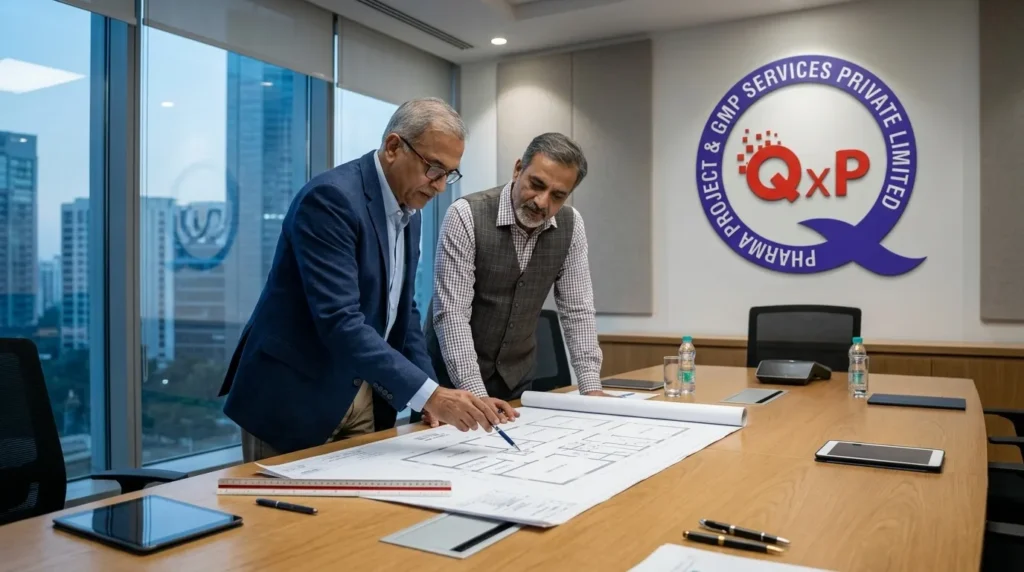
Navigating Regulatory Compliance & GMP Standards in India
India’s pharmaceutical regulatory environment is layered — and rightly so. CDSCO guidelines, WHO GMP guidelines, and the revised Schedule M (amended in 2023) together define what a compliant pharmaceutical facility looks like. But the challenge for most project teams — especially those setting up their first unit — is translating these dense regulatory documents into actionable construction and operational decisions.
The revised Schedule M has strengthened requirements around quality management systems, supplier qualification, contamination control strategies, and data integrity. A Schedule M compliance consultant who has actually implemented these requirements across diverse facilities — not just read the gazette notification — can cut your preparation time significantly.
Similarly, WHO GMP guidelines implementation requires more than matching checklist items. It requires understanding the intent behind each requirement and building your SOPs, training records, and equipment logs accordingly. QxP Pharma Project & GMP Services has guided units in Chennai, Bangalore, Delhi NCR, and Mumbai through successful WHO-GMP certifications — including pre-inspection mock audits, deficiency resolution, and CAPA documentation.
Being a recognised GMP consultant in Ahmedabad also means the team understands how Gujarat FDA functions at a procedural level — which speeds up state-level licensing considerably for units based in Ahmedabad, Surat, and Vadodara.
Local Consultants vs QxP Pharma Project & GMP Services — A Practical Comparison
When evaluating who to bring in as a GMP plant design consultant India, it helps to see the differences in black and white. Here’s what that comparison typically looks like:
| Parameter | Typical Local Consultant | QxP Pharma Project & GMP Services |
|---|---|---|
| Experience | 5–8 years, limited project types | 22+ years (Pankaj Sojitra), 18+ years (Vijay Patel); 300+ projects |
| Regulatory Coverage | State licensing only | CDSCO, WHO-GMP, USFDA, Schedule M, EU GMP preparation |
| Facility Layout & Design | Generic drawings, no HVAC integration | WHO GMP facility layout planning with HVAC, cleanroom, and pressure differential design |
| Cost Estimation | Rough lumpsum, often underestimated | Detailed break-up: civil, MEP, HVAC, equipment, validation, regulatory |
| Validation Services | Outsourced or not included | In-house pharmaceutical validation services (DQ/IQ/OQ/PQ, CSV) |
| Post-Setup Support | Limited to project completion | Ongoing GMP audit support, product registration, CAPA management |
| Pan-India Reach | Limited to home state | Active presence across Mumbai, Delhi, Hyderabad, Bangalore, Chennai, Jaipur, Kolkata, and more |
| Process Standards | Ad hoc | ISO 9001:2015 aligned, IPA member |
Step-by-Step: How QxP Pharma Project & GMP Services Delivers a Delay-Free Project
Here’s how the team structures every engagement to compress timelines and eliminate the most common failure points:
- Step 1 — Discovery & Gap Assessment: A structured review of your project brief, site conditions, product portfolio, and regulatory target. This is where we identify your highest-risk areas before a single rupee is spent on civil work. (Claim your Free GMP Gap Assessment Checklist via our contact page.)
- Step 2 — Concept Layout & Regulatory Mapping: Facility layout is developed in parallel with regulatory strategy — meaning every zone, every door, every pressure differential is pre-aligned with CDSCO and WHO-GMP expectations. No rework at inspection stage.
- Step 3 — Detailed Project Report (DPR) & Cost Plan: A transparent, itemised cost plan is issued before any construction contracts are awarded. Clients setting up a turnkey pharma plant setup near me can now enter financing discussions with banks and investors armed with credible, auditable numbers.
- Step 4 — Civil, HVAC, and Utility Execution Oversight: QxP’s team provides site supervision at critical milestones — not just periodic visits — ensuring that cleanroom construction, HVAC installation, and utility commissioning meet qualification-readiness standards from day one.
- Step 5 — Equipment Qualification and Validation: IQ/OQ/PQ protocols are issued in alignment with Schedule M, WHO-GMP, and product-specific validation requirements. The pharmaceutical validation services team works concurrently with equipment installation wherever possible to reduce the validation phase post-commissioning.
- Step 6 — Pre-Inspection Readiness & Licensing Support: A full mock inspection is conducted 6–8 weeks before the official date. Gaps are closed, SOPs are audited, and the team is trained. Licensing documentation is submitted complete and on schedule.
- Step 7 — Post-Handover GMP Support: Even after the project is handed over, QxP remains available for GMP compliance audits, product line expansions, and regulatory queries. A Pharmaceutical Turnkey Project Consultant in Ahmedabad that disappears after handover is not a partner — it’s a vendor.
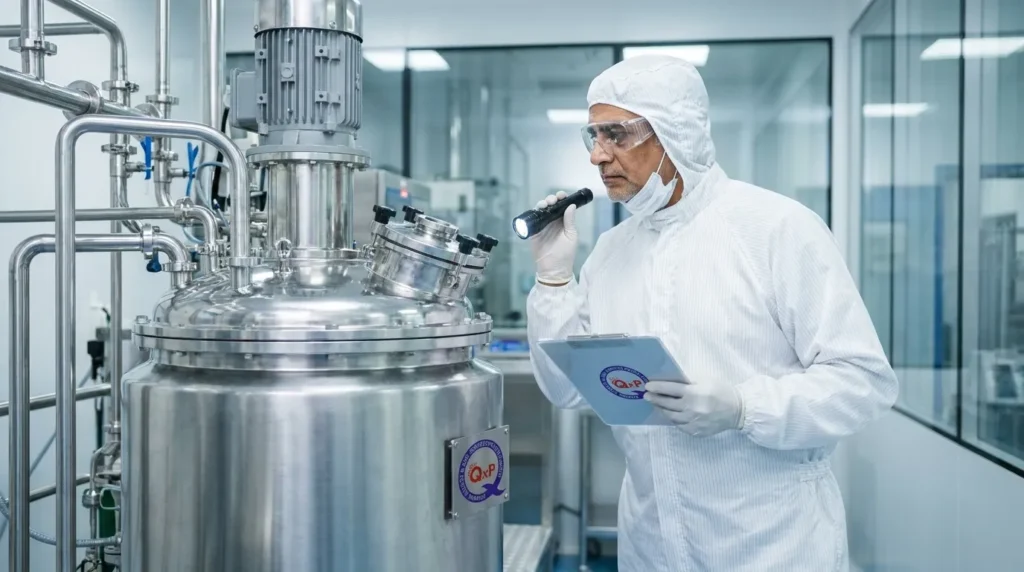
Mini Client Success — Oral Solids Unit, Rajasthan
A mid-sized pharma company from Jaipur had already burned 14 months and ₹1.2 crore on a partially constructed oral solid dosage plant when they came to QxP Pharma Project & GMP Services. The original consultant had missed the clean room classification requirements for the coating area under revised Schedule M. Within 8 weeks, our team issued a rectification layout, revised the HVAC design, and submitted the corrected documentation to Rajasthan FDA. The unit received its manufacturing licence 4 months later — a recovery that the client hadn’t thought possible.
Real Client Case Study: Greenfield Sterile Injectable Unit, Pune
Client Background
Client name anonymised as “PharmaCo Pune” for confidentiality.
PharmaCo Pune is a promoter-led pharmaceutical company with a strong domestic formulation business and ambitions to enter the regulated export market (Southeast Asia and African generics). In 2022, they decided to set up a greenfield sterile injectable manufacturing unit near Pune to support this strategy.
Challenge
The project had been initiated with an engineering firm that specialised in food processing plants — not pharmaceutical GMP facilities. Fourteen months in, the project had serious issues: the ISO 5 filling zone was undersized for the planned batch sizes, the HVAC system had been designed without adequate cascade pressure differentials between classified zones, and the water-for-injection (WFI) distribution loop was non-compliant with 70°C recirculation requirements under WHO GMP. The project was stalled, and the promoter was facing ₹2.8 crore in rework costs.
QxP Pharma Project & GMP Services’ Intervention
The team was brought in as a rescue consultant. Mr. Vijay Patel personally led the gap assessment, reviewing civil drawings, HVAC designs, P&ID diagrams, and the original regulatory submission. A structured 12-week remediation plan was issued covering: ISO 5/7 zone resizing, HVAC redesign with validated room pressure records, WFI loop retrofitting, and a revised WHO-GMP facility layout planning package for the Maharashtra FDA submission.
Outcome
- Facility rework completed within 14 weeks (original estimate was 9+ months by the previous team)
- WHO-GMP certification application submitted 6 months after QxP’s engagement
- First WHO-GMP inspection cleared with zero critical observations
- Client successfully onboarded two regulated-market export contracts within 18 months of plant commissioning
- Total remediation cost: ₹1.4 crore — 50% less than original rework estimate
“Having a consultant who had actually seen sterile unit inspections from both sides — design and audit — made the difference. We didn’t have to guess what WHO-GMP auditors would look at.” — MD, PharmaCo Pune
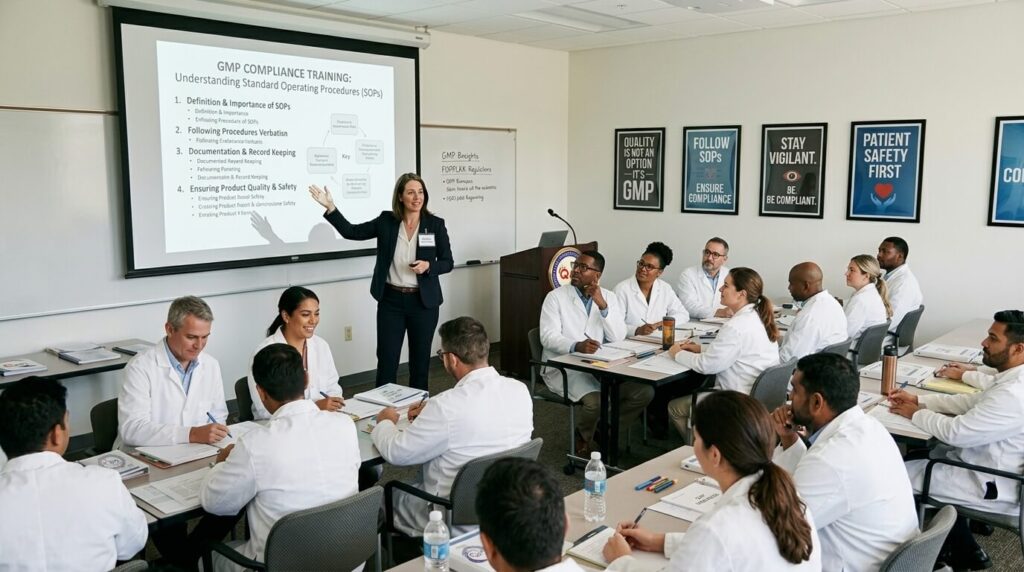
FAQ: Why Pharma Projects Face Costly Delays
1. What are the most common causes of delays in pharmaceutical projects?
- The most common causes include poor project planning, regulatory compliance issues, design changes, equipment procurement delays, contractor coordination problems, and inadequate risk management. Early planning and GMP-focused execution help minimize these challenges.
2. How do regulatory requirements impact pharma project timelines?
- Regulatory requirements can significantly affect timelines because pharmaceutical facilities must comply with GMP standards, validation protocols, and quality regulations. Any non-compliance identified during audits or inspections may require corrective actions, resulting in project delays and additional costs.
3. Why is equipment procurement a major challenge in pharma projects?
- Specialized pharmaceutical equipment often has long manufacturing and delivery lead times. Delays in vendor approvals, international shipping, installation, or Factory Acceptance Testing (FAT) can impact the entire project schedule and delay facility commissioning.
4. How can GMP compliance help reduce project delays?
- Integrating GMP requirements from the project’s initial design phase reduces the risk of redesigns, validation failures, and regulatory observations. A GMP-compliant approach ensures smoother execution, faster approvals, and timely project completion.
5. What role does project management play in preventing costly delays?
- Effective project management ensures clear communication, milestone tracking, resource allocation, risk assessment, and stakeholder coordination. Strong project leadership helps identify issues early and keeps pharmaceutical projects on schedule and within budget.
6. How do design modifications affect pharmaceutical project costs?
- Late-stage design changes can lead to rework, additional engineering efforts, procurement adjustments, and construction revisions. These modifications often increase project costs and extend timelines, making early design finalization critical for success.
7. How can pharma companies avoid costly project delays?
- Pharma companies can reduce delays by conducting detailed feasibility studies, selecting experienced GMP consultants, implementing robust project controls, maintaining regulatory compliance, and proactively managing risks throughout the project lifecycle.


Comments
Post a Comment